Editorial Design for those who want to leave a mark
Why print when everyone's on their Phone?
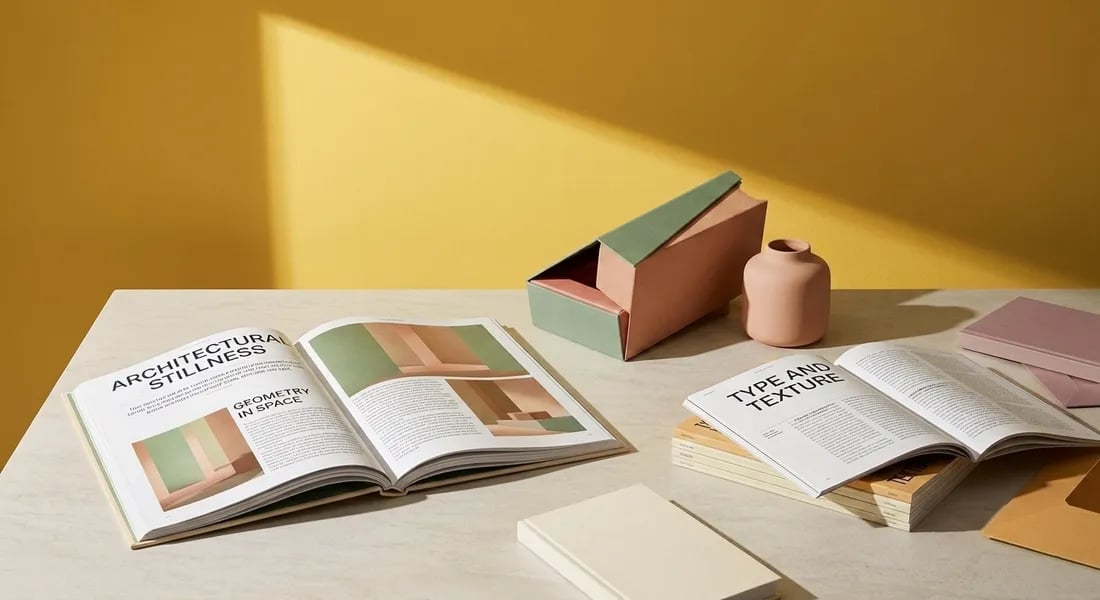
Not everything is pixels. Editorial design is proof that some messages only work on paper. And that after years of QR codes and screens for everything, people started missing something real in their hands.
A catalogue that stays on the client's desk. A business card that ends up in someone's pocket. Signage that guides you without asking you to open an app. These are objects that behave differently from a screen: more immediate, longer-lasting, hard to ignore.
Print isn't a step backward. It's a precise choice, for anyone who wants to leave a mark that lasts beyond the browsing session.
When it makes sense to start here:
You're producing a catalogue, a book, an annual report
You have an event, a trade fair, a launch that deserves corporate or promotional material
You have physical spaces that need signage
Your printed material doesn't reflect the level of your brand
How I work
Phase 1: Objective and Context
Before the layout: who this object is for, what it needs to do, where it will be used. A catalogue for a luxury client follows different logic than a report for investors or a signage system.
Phase 2: Design and Development
Typographic research and layout
Paper selection and print specifications (digital, offset, litho)
Layout and testing of solutions before final print
Iterations until the result is right
Phase 3: Production and Delivery
Coordination with the printer, print-ready files, supervision if needed. For complex projects (signage, installations), full management of the production process.
Paper, ink and space
From the page to the physical space: every project has its own format, logic and audience.
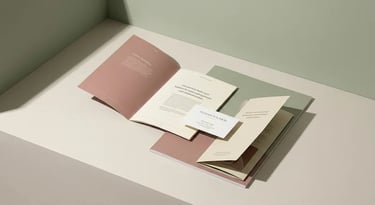


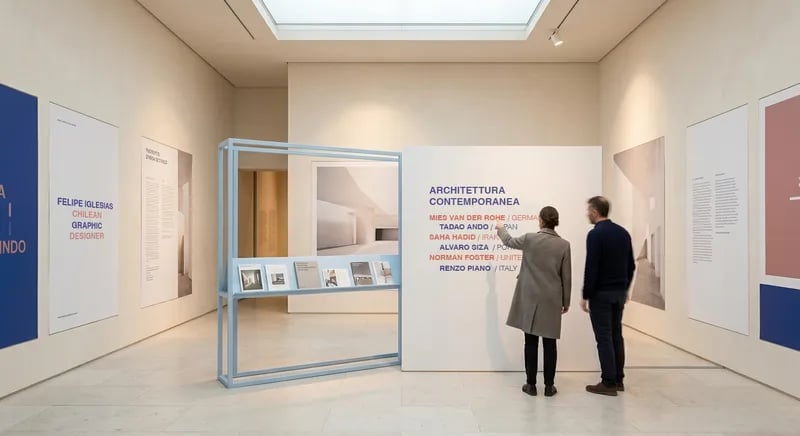
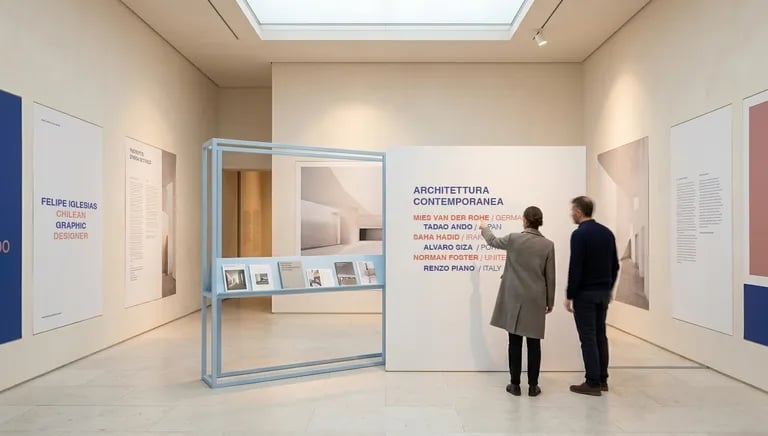
Vuoi conosce alcuni progetti che ho fatto? visita felipeiglesias.com
Books, magazines & catalogues
From research to layout, to choosing type and paper. Maximum attention to readability and the reading experience, not just aesthetics.
Commercial material
Brochures, leaflets, invitations, business cards, annual reports. Consistent with your brand identity, not a generic template.
Signage and Wayfinding
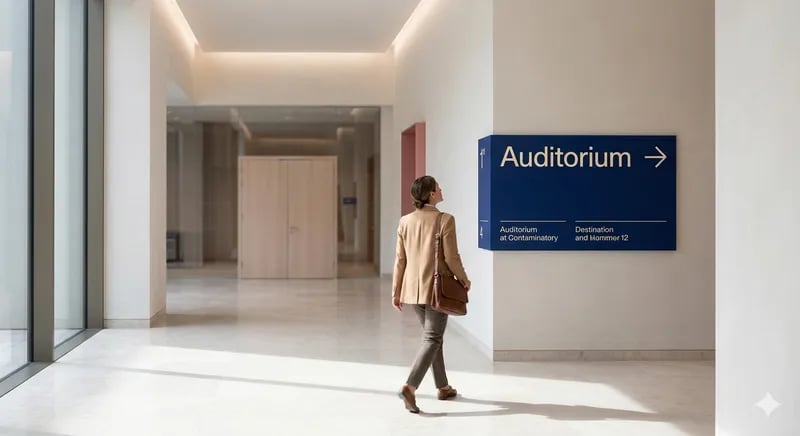
For public spaces, businesses and museums. Systems that guide people with clarity and consistency, integrated with the physical space.
Exhibition Design
Graphics for exhibitions, exhibition design, museums and cultural events. Where design helps communicate and understand culture.
Print isn't dead.
It became a luxury again.
In a world where everything is digital, the physical object took on a different kind of value. Holding something tangible has become a small privilege.
A well-made catalogue isn't a cost: it's a statement. It says you care, that your product deserves a carefully considered context, and that your client deserves more than a link.
If you already have a project underway or something to update, we start from there. You don't always have to start from zero.


Think print isn't worth it anymore?
Think again. It depends on what you need.
For many things, no: digital is faster, cheaper, easier to measure. But a catalogue a client flips through, a book that stays on a desk, a signage system that guides people through a physical space: these things have no digital equivalent.
If you need a printed object, it's worth doing well. For everything else, there's pixels.
What Editorial Design includes
What it costs


"I've designed books, catalogues and signage systems for cultural institutions, luxury brands and B2B companies, in Italy and abroad. Every printed object has its own logic: understanding it is the first step toward an excellent product."
— Felipe Iglesias
Have an editorial project in mind?
Or an existing one that needs updating?